Synthesis Essay First Draft
Dear Mom,
I am writing this letter to you as an assignment for English class. I wanted to share with you some things that really resonated with me during English class, as they reminded me of you. I came to realize that many of the things I’ve seen and read about in class are more common than I thought. In pieces like “Mother’s Tongue” by Amy Tan and “The House on Mango Street” by Sandra Cisneros have shown me experiences that we’ve been through or that we have similarly been through. I wanted to try to decipher a connection between all these articles and books to determine how you’ve shaped my identity as my mother through the experiences we have shared together. Through these readings, I have started to understand how much your words, stories, and actions have shaped me into becoming the person I have become and am still becoming to this day.
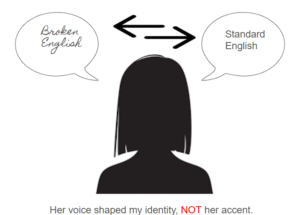
In the essay “Mother’s Tongue”, Amy Tan shared a few experiences that she’s been through with her mom or by herself, where they have been discriminated against or underestimated just because of their personal background and how they speak. I read something in the text that reminded me of something that we had been through a while back. Amy Tan writes, “Her language, as I hear it, is vivid, direct, full of observation and imagery. That was the language that helped shape the way I saw things, expressed things, made sense of the world.” (Tan) This really caught my eye because, as the author states, with the way you talk, I feel like I can understand everything you say more than clearly. It’s almost as if there’s a whole other world behind your words, but that’s probably because I’ve been around your way of speaking for my entire life. But that made me think about the time we were at the supermarket, and an employee started talking slowly to you as if you didn’t speak English. I remember thinking, “Wow, is this real?” because that was the first time I really experienced something like this in person. I was genuinely confused in that moment, too, because I could understand the words coming out of her mouth just fine, but standing in front of me was this lady who spoke to you as if you were speaking another language. This kind of like, goes to show how people would label you as less intelligent or undereducated just because you speak broken English.
In Sandra Cisneros’ book “The House on Mango Street” she shares the story of Esperanza and how she learns about things like growing up, gender, culture, her identity, and language, all during her time living on Mango Street. This actually wasn’t something I read in college, but it is also from a chapter I specifically remember from the book, and it’s really stuck with me. In the book, it says, “In English my name means hope. In Spanish it means too many letters. It means sadness, it means waiting.”(Cisneros,10) This kind of shows how, depending on how I were to look at her name, it could come with a very different meaning, kinda similar to the supermarket situation. Depending on the way you view your language and way of speaking, people can have different interpretations of you. This shows how language can be both a barrier and a bridge.
Both Amy Tan and Sandra Cisneros help emphasize that language can hold a variety of meanings depending on who is listening to them. These writers helped me see that language isn’t just words; they have identity and meaning. But as you may know, this obviously wasn’t the first time I’ve learned about this. You were the one who actually taught me that the way someone speaks doesn’t define their intelligence. Your voice has always been the one that has guided me and shaped me into the person that I am today. A parent and a child will, 99% of the time, have a unique bond through language that most people will not be able to understand.
In the article “Bilingualism in the Early Years: What the Science Says” by Krista Byers-Heinlein and Casey Lew-Williams, it states that a study was conducted on how children learn language. Using the research from the experimentations, she wrote, “Infants can discriminate rhythmically dissimilar languages like English and French at birth.”(Byers-Heinlein and Lew-Williams, 98) This goes to show that language awareness is pretty innate, and obviously, humans are going to notice a difference in accent. The article also talks about how all these habits, like code meshing/switching, are also a very regular part of being bilingual. It’s also very normal to speak differently from somebody else. Even though the people around me like to judge, I have the ability from early on to understand and value your different dialect. Since your accent is scientifically proven to be 100% valid and natural, it shows that this isn’t a sign of weakness or unintelligence.
Now then, I feel like we have spotted an apparent connection between these three pieces. A message I could really take away from this is that it’s pretty natural to be able to see that although it’s very natural to see someone from a different perspective than someone else, their speaking differently from you doesn’t make them any less of a person than you are. Both Cisneros and Tan highlight how society often misinterprets or confuses people the second they hear a difference in language. Heinlein and Williams then add on to this by proving that this reaction is natural but unjust. Linguistic differences are not signs of low intelligence or anything; it’s simply just how the human brain is wired. It’s basically saying the problem doesn’t lie in the language, but it lies in the people who decide to attach value to a particular way of speaking.
In conclusion, it is unfair to judge someone based on their accent, language, dialect, way of speaking, etc., because it’s something that comes to one naturally. This is my personal letter to you, Mom, to say I know it’s hard being an immigrant and trying to get around, even though English isn’t even your first language. I know it gets hard sometimes, but I’m here to tell you to keep going because we have a special connection that nobody else does. Even if the people around you aren’t able to understand you, I’ll be able to know precisely what you mean because you have shaped me into being a fantastic version of myself.
Work Cited
Tan, Amy. “Mother Tongue.” The Threepenny Review, no. 43, 1990, pp. 7–8.
Cisneros, Sandra. The House on Mango Street. Vintage Books, 1991.
Byers-Heinlein, Krista, and Casey Lew-Williams. “Bilingualism in the Early Years: What the Science Says.” Learning Landscapes, vol. 7, no. 1, 2013, pp. 95–112. PMC,

This entry is licensed under a Creative Commons Attribution-NonCommercial-ShareAlike 4.0 International license.

